



Angled vs. Straight Spotting Scopes
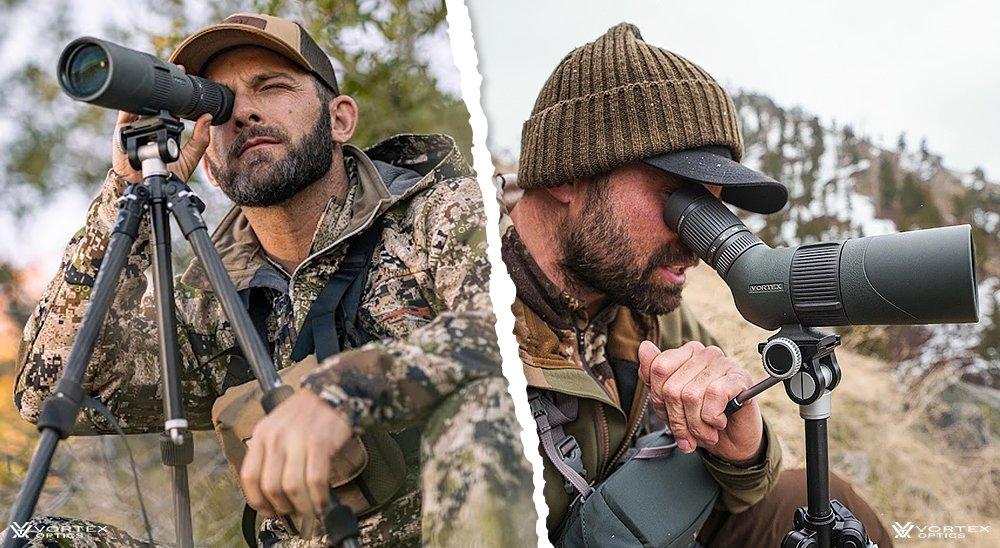
When choosing a spotting scope for hunting or wildlife observation, you'll notice that there are two types to choose between—angled and straight. Both provide sharp, detailed images of distant targets, but each is suited to different situations. Our Optics Experts share the advantages and disadvantages of each type to help you find the perfect spotting scope for your needs.
What is an Angled Spotting Scope?
Angled spotting scopes have an eyepiece angled upwards, which often rotates to help you find a comfortable viewing position. This design allows for a shorter tripod and makes it easier to view targets from lower positions without straining your neck.
Advantages of Angled Spotting Scopes
-
Easily shared within a group
-
Comfortable while seated or standing
-
Comfortable when glassing upwards, especially steep angles
-
Can use a short, more stable tripod
Disadvantages of Angled Spotting Scopes
-
Takes up more space
-
Not as easy to locate and track your target
-
Hard to glass downwards
What is a Straight Spotting Scope?
Straight spotting scopes are longer and resemble a telescope, with a straight eyepiece aligned with the body. Their compact profile makes them easier to store in a pack, and they are particularly useful for viewing lower elevations or glassing from prone positions.
Advantages of Straight Spotting Scopes
-
Stores better in your pack
-
Easier and faster to locate targets
-
Easier to use out of a car window or in a prone position
Disadvantages of Straight Spotting Scopes
-
Needs a higher tripod, sometimes less stable
-
Difficult to share with people of different heights
-
Harder to view objects that are higher up
-
Can cause neck strain
Angled vs. Straight Spotting Scopes Comparison Chart
To help easily compare angled and straight spotting scopes, this chart highlights their key features and differences.
| Feature | Angled Spotting Scope | Straight Spotting Scope |
|---|---|---|
| Eyepiece Position | Angled upwards, often rotates | Straight, aligned with scope body |
| Best Viewing Position | Seated or standing | Prone or from car window |
| Tripod Height | Can use shorter, more stable tripod | Needs taller tripod, sometimes less stable |
| Sharing with Others | Easy to share | Harder with people of different heights |
| Tracking Targets | Slightly harder to locate and follow | Easier to locate and track |
| Viewing Up or Down | Great for looking up, hard down | Harder to view higher, easier down |
| Portability | Takes up more space | Fits in a pack easily |
| Comfort | Comfortable for long viewing sessions | Can cause neck strain |
Deciding between angled and straight spotting scopes comes down to personal preference and how you plan on glassing. If you plan on sitting or standing, it’s best to choose an angled spotting scope. If you plan to glass from a prone position or use both binoculars and a spotting scope on the same hunt, choose a straight spotting scope. Leading optics brands like SWAROVSKI OPTIK, Vortex, and Leupold offer models in both angled and straight so you can find the right spotting scope for your needs. If you have additional questions about choosing the best spotting scope, stop into your local SCHEELS to speak with an Optics Expert.