



A Guide to Choosing the Best Ice Fishing Battery
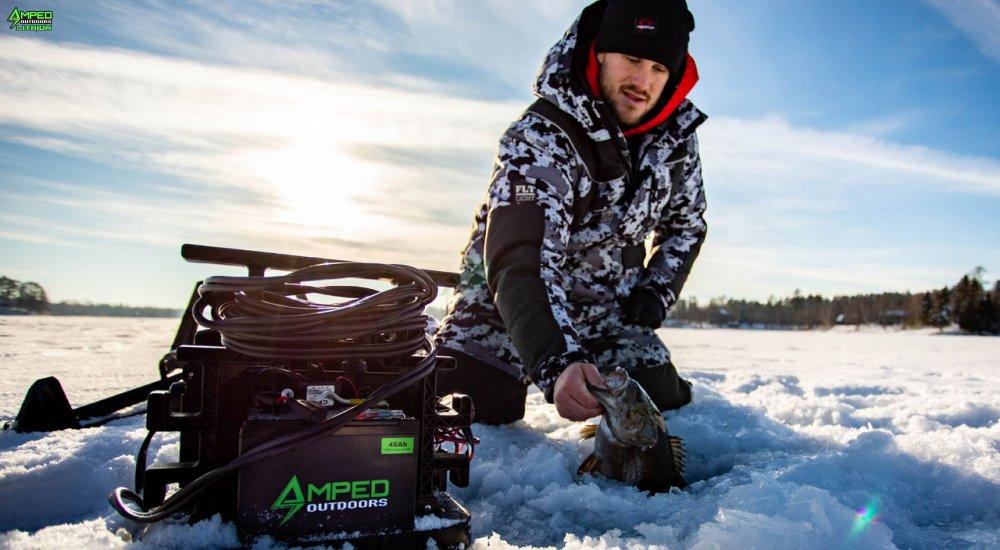
When you’re out on the ice, a dependable battery is essential for powering flashers, fish finders, cameras, and other electronics as well as shelter lights. To help you navigate the selection of ice fishing batteries, our Ice Fishing Experts explain the differences between lead acid and lithium-ion batteries as well as what to consider when choosing the size so you can keep your gear running season after season.
Lead Acid vs. Lithium-Ion: Which Ice Fishing Battery is Best?
Ice anglers typically choose between two main battery types: Sealed Lead Acid (SLA) and Lithium-Ion. Each has distinct advantages and trade-offs, so understanding their performance features can help you decide which is right for your setup.
Sealed Lead Acid (SLA) Batteries
For decades, SLA batteries were the standard for powering flashers and other electronics. They’re reliable and affordable, but they do come with a few key drawbacks:
-
Weight: Most SLA batteries weigh 5–6 pounds, which adds up if you’re hauling gear across the ice.
-
Depth of Discharge: SLA batteries shouldn’t be drained below 50% capacity, limiting their usable power.
-
Run Time: They have shorter overall run times compared to lithium options, especially in extreme cold.
Lithium-Ion Batteries
Lithium-ion batteries have quickly become the go-to choice for many ice anglers. They offer several advantages over SLA batteries, making them ideal for those who want lighter gear and longer run times.
-
Weight: A lithium-ion battery can weigh as little as 1.1 pounds.
-
Depth of Discharge: Lithium-ion batteries can safely be drained up to 85%, providing more usable power.
-
Run Time: Provides significantly longer run times, even in extreme cold.
-
Faster Charging: Fully recharges in 3–5 hours, so you can get back on the ice quickly.
-
Longevity: Built to last 10+ years, compared to the 1–3 year lifespan of SLA batteries.
One main drawback to lithium-ion batteries is the price. They cost more compared to SLA batteries, but you won't have to replace them as frequently.
Related Expert Content | Types of Lithium-Ion Ice Fishing Batteries >
Lead Acid vs. Lithium-Ion Chart
Below is a comparison between the different features of lead acid and lithium-ion batteries.
| Feature | Sealed Lead Acid (SLA) | Lithium-Ion |
|---|---|---|
| Weight | 5—6 lbs. | 1—2 lbs. |
| Depth of Charge | ~50% usable capacity | ~85% usable capacity |
| Run Time | Shorter, especially in cold temps | Longer, consistent performance in cold temps |
| Charging Speed | 8—12 hours | 3—5 hours |
| Lifespan | 1—3 years | 10+ years |
| Cost | $ | $$ |
Choosing the Right Battery Size for Your Ice Fishing Electronics
Once you’ve chosen between SLA and lithium-ion, it’s important to select the right battery size to match the power demands of your electronics. Different devices draw different amounts of current, so understanding both voltage and amp draw is key to ensuring your gear runs reliably throughout your trip.
What About Voltage?
Most ice fishing electronics are designed to run on 12-volt batteries, which is the standard across flashers, fish finders, and sonar units. When choosing a battery, always make sure the voltage matches your device’s requirements—using the wrong voltage can damage your electronics.
What Is Amp-Hour (Ah)?
Amp-hour (Ah) is a measure of a battery’s energy storage capacity. A higher Ah rating means the battery can deliver more power over time, allowing your electronics to run longer without needing a recharge. By selecting a battery with the right Ah for your setup’s amp draw, you can avoid running out of power on the ice and maximize your fishing time.
General Battery Size Guidelines
Our Fishing Experts recommend reviewing the voltage and amp-hour requirements for your fishing electronics. This will help you find the right battery to fit your electronics' specifications. Below are general guidelines to get started:
-
Flashers: Flashers from brands like Vexilar, typically draw around 0.25 amps, meaning even a small battery can provide several hours of operation.
-
Convertible Units: Units like the Humminbird Helix can draw up to 1 amp, so a mid-sized battery will keep them running for a full day on the ice.
-
Forward-Facing Sonar or Advanced Electronics: Units like Garmin Livescope or another forward-facing sonar technology, can draw 3.5 amps or more, requiring a higher-capacity battery to maintain long run times.
-
Ice Shelter Lights: Depending on the kit, ice shelter lights can draw anywhere from 1 to 2 amps.
A simple way to estimate the right battery size is to match your electronics’ amp draw to the hours you plan to fish. For example, if your sonar draws 1 amp and you want it to run for 10 hours, you’ll need at least a 10Ah battery (1 amp × 10 hours = 10Ah). For higher-draw electronics like forward-facing sonar, a 20Ah or larger is often the best choice for all-day performance.
| Ice Fishing Electronic | Average Amp Draw | Battery Size (Ah) |
|---|---|---|
| Flasher | ~0.25 amp | 5-7Ah |
| Convertible Unit | ~1 amp | 10Ah |
| Forward-Facing Sonar | 3.5+ amps | 20Ah+ |
| Ice Shelter Lights | 1-2 amps | 10Ah+ |
Expert Note | Always make sure that you use the correct charger for your battery.
Frequently Asked Questions about Ice Fishing Batteries
When working with customers, our Ice Fishing Experts often hear the following questions asked.
Choosing the right ice fishing battery comes down to finding the balance between weight, run time, and cost. With the right battery, your electronics stay reliable all season long—so you can focus on drilling holes, chasing fish, and making memories on the ice. If you have additional questions about choosing an ice fishing battery, stop into your local SCHEELS to speak with an Expert.