



How to Fit & Focus Your Binoculars
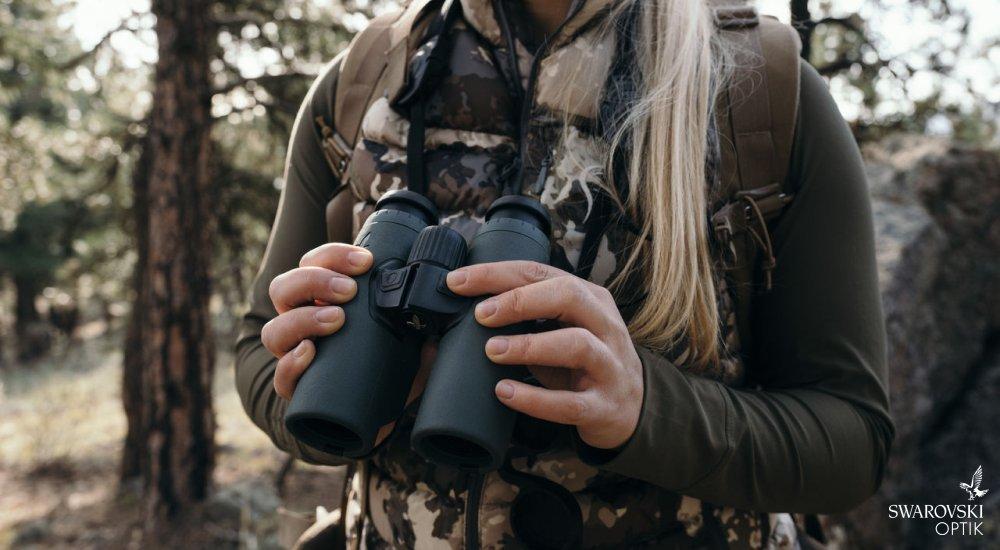
After choosing the right pair of binoculars, it's important to understand how to fit and focus them to get the most out of your investment. Whether you're bird watching, waiting for a buck, or enjoying nature, our Optics Experts explain how your binoculars should fit and how to get the most precise sight.
Understanding Eye Relief
Whether hunting or observing, the purpose of using binoculars is to provide the clearest enhanced view. Eye relief is one of the most important aspects of binoculars, especially for people who wear glasses. Eye relief is the distance between the lens of your binoculars to the eyepoint (tip of the eye), and is responsible for providing a clear image. There are two different types: short and long eye relief.
Short Eye Relief
Also known as standard, short eye relief provides a short distance between the eyepiece and the eye. This option is ideal for people who don't wear glasses and offers a more immersive view. Common distance for short eye relief is around 13 millimeters, but can be even shorter.
Long Eye Relief
Opposite of short, long eye relief (or LER) provides a further distance between the eyepiece and the eye. Long eye relief is better for those who wear glasses, delivering a more comfortable experience. Common distance for long eye relief is around 16 millimeters, but can be more depending on the glasses’ thickness.
Fitting Your Binoculars
Adjusting the Eyecups
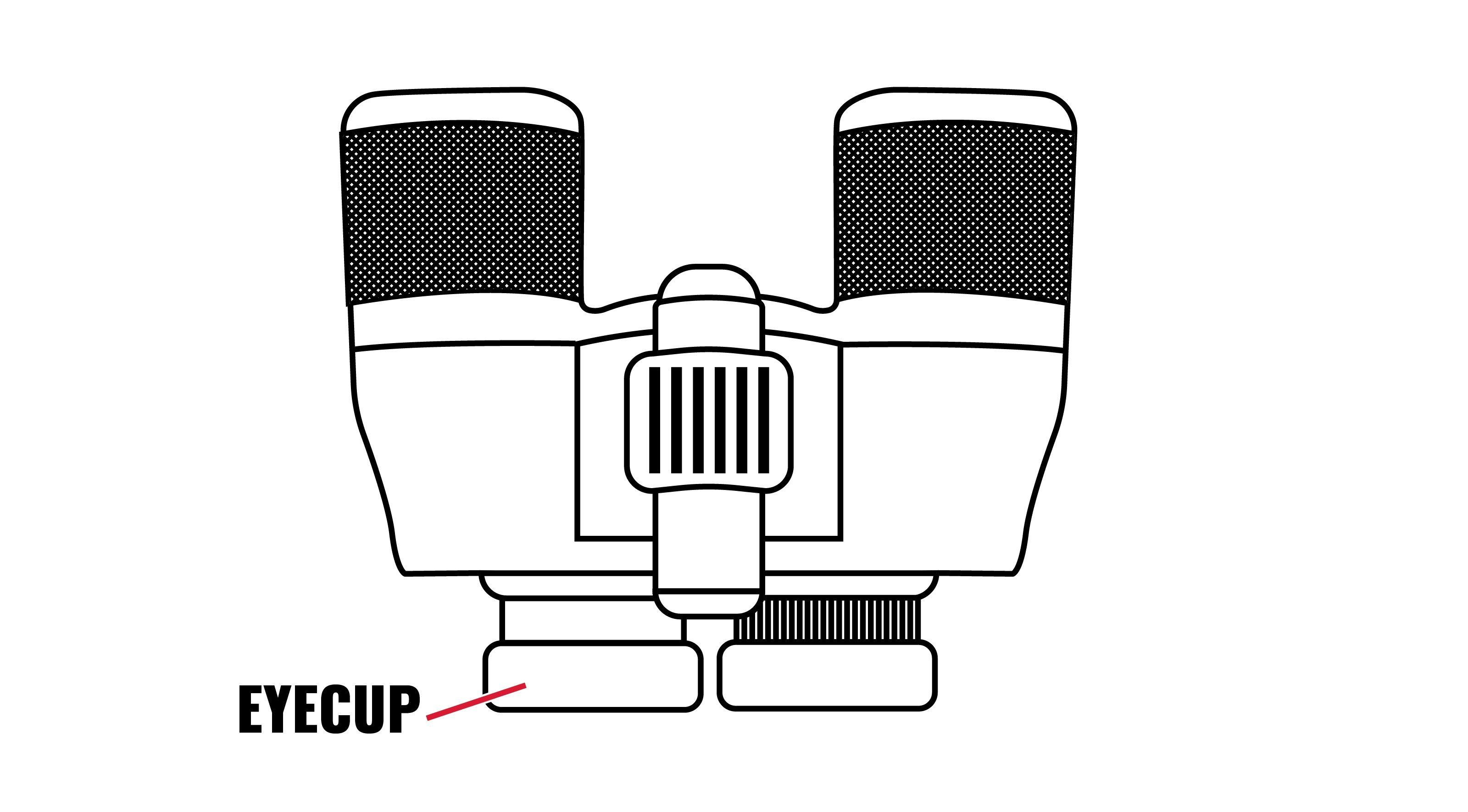
The eyecups rest comfortably around your eyes and securely hold the ocular lenses—the lenses you look through. Every pair of binoculars features eyecups that twist up and down. When you first remove your binoculars from the packaging, the eyecups may already be down. People with glasses should only use binoculars with the eyecups twisted down for the best viewing experience.
Adjusting the Barrels
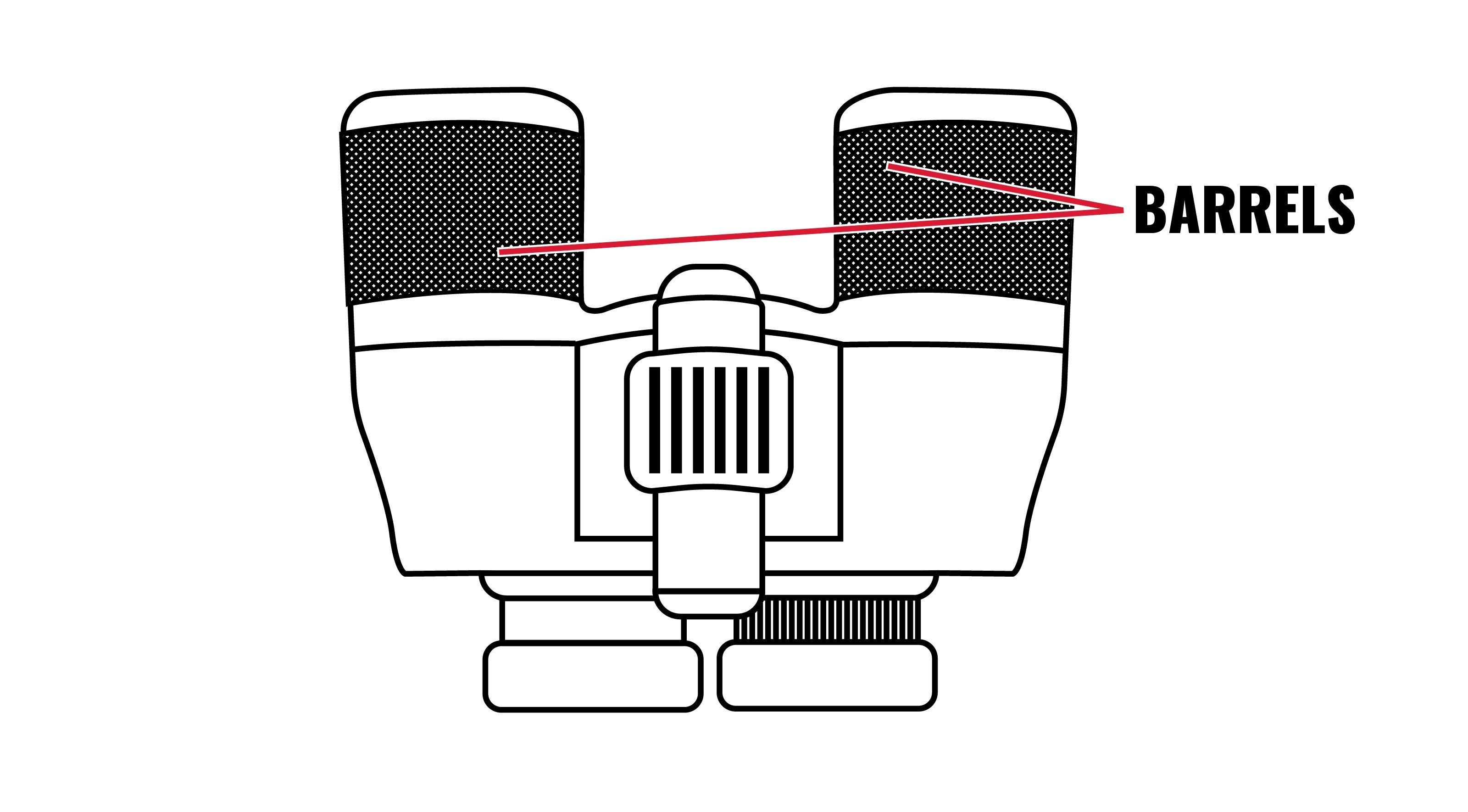
The barrels of the binoculars are what match the distance between your eyes, or interpupillary distance. When looking through, use your hands to adjust the barrels until your vision is no longer distorted, or you have a clear view.
Once your eyecups are comfortably positioned, hold the left barrel steady and use your hand to rotate the right barrel. When you see a perfect circle of light with both eyes, you can stop rotating the barrel; this is the exit pupil.
Focusing Your Binoculars
Adjust the Center Control & Diopter
Center Control
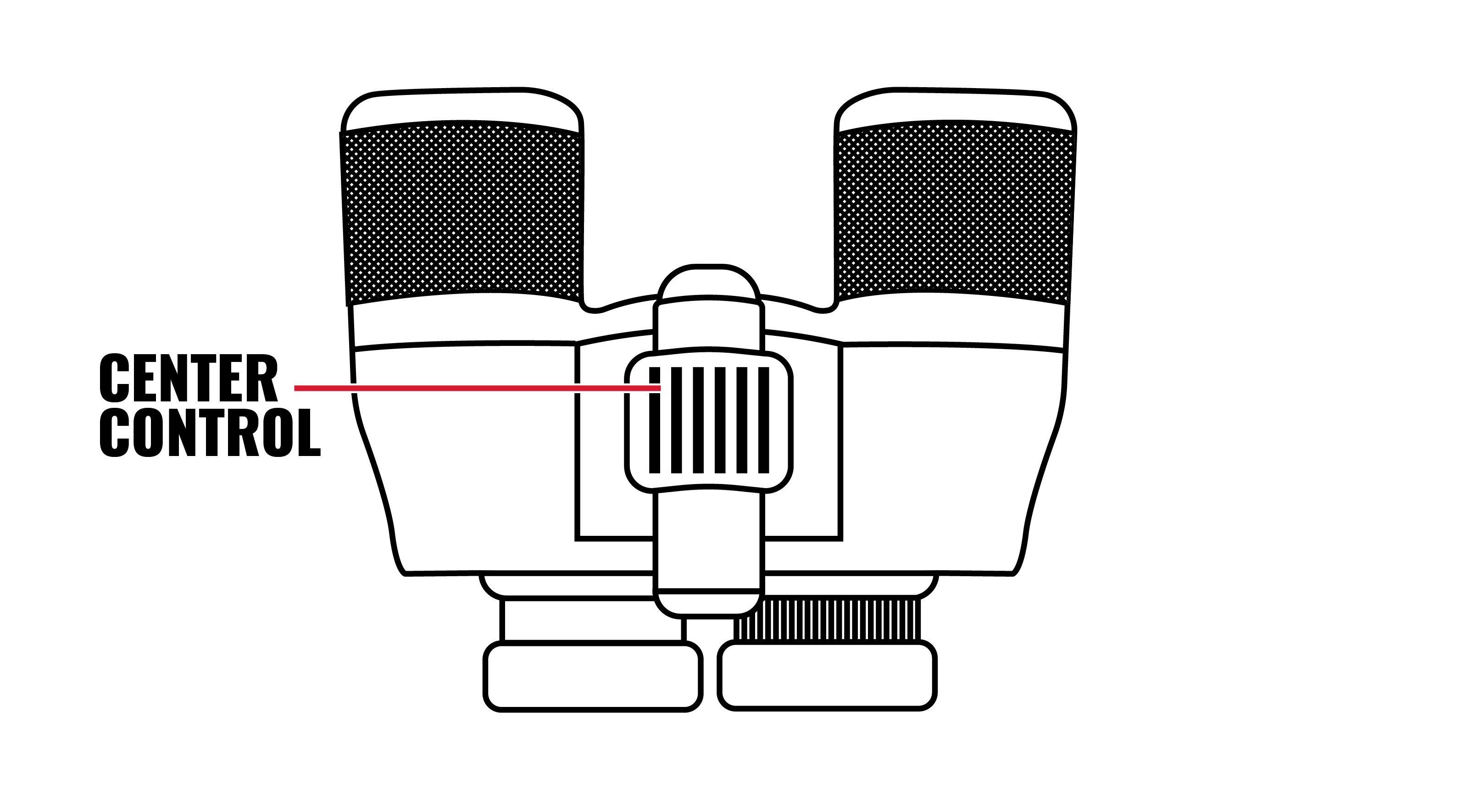
The center control dictates clarity in both barrels at the same time. Here's how to adjust using the center control:
-
Using your hand or a lens cap, cover the lens with the diopter adjustment (typically the right side) and focus the center focus wheel on a distant, stationary object until your view is sharp.
-
Then, cover the other lens, and use the diopter to repeat the same process on the same object through your right eye.
-
Once your view is clear in both eyes, only use the center focus wheel to adjust from then on.
Expert Tip | Note what number the diopter is at when fully focused; this makes it easy to double-check and adjust if moved.
Diopter Control
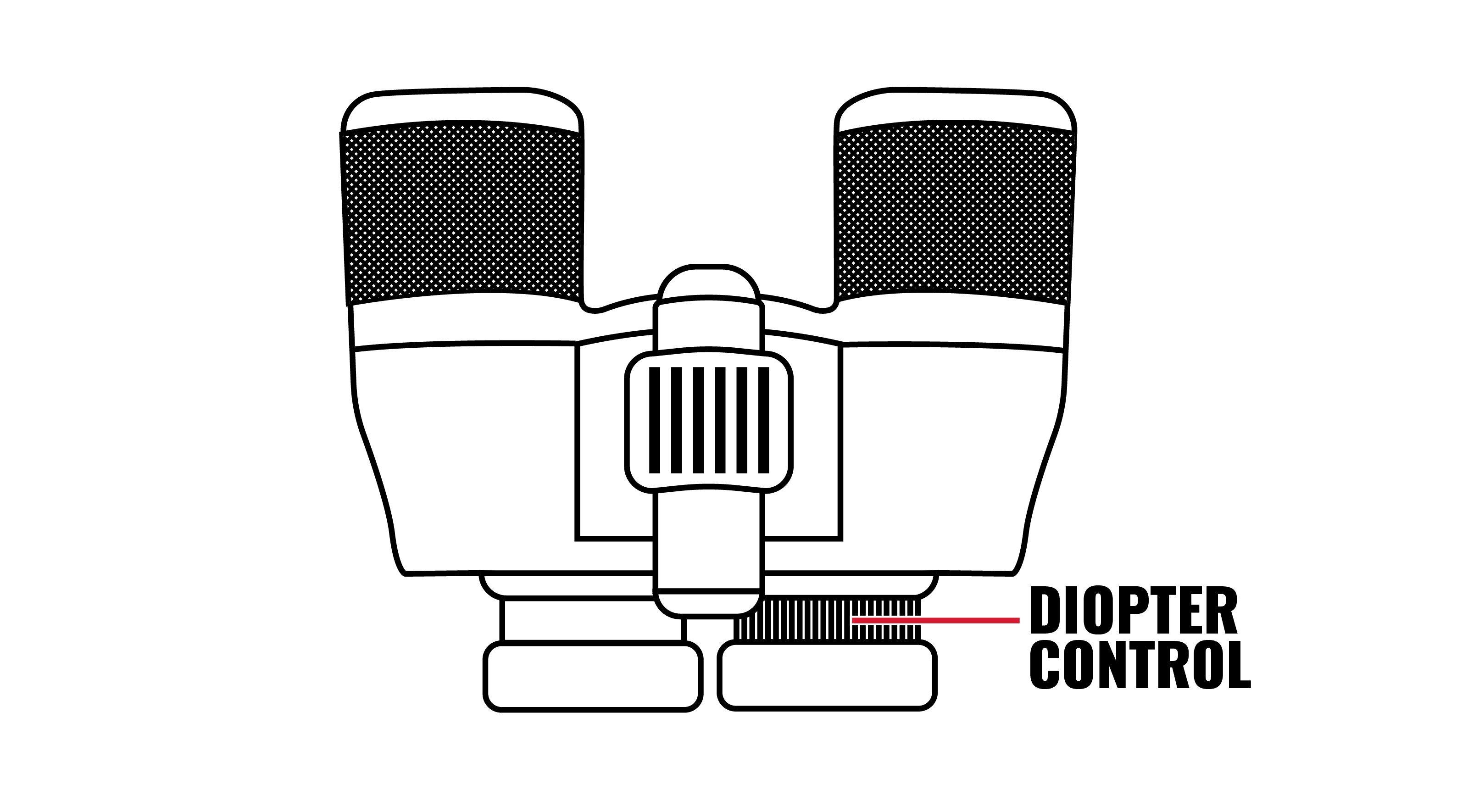
The diopter is on only one barrel of the binoculars and compensates for any differences your eyes might experience to provide a clear and sharp view. This can be rotated along with the center control for the best results.
Understanding how to properly use your binoculars is crucial to getting the most out of your investment. Whether you’re birdwatching, tracking an animal, or observing nature, you can easily adjust and focus your binoculars to get the clearest view. For more information on binoculars and other optics, visit your local SCHEELS to speak with an Expert.