



Trolling for Walleye—Tips from Jason Mitchell
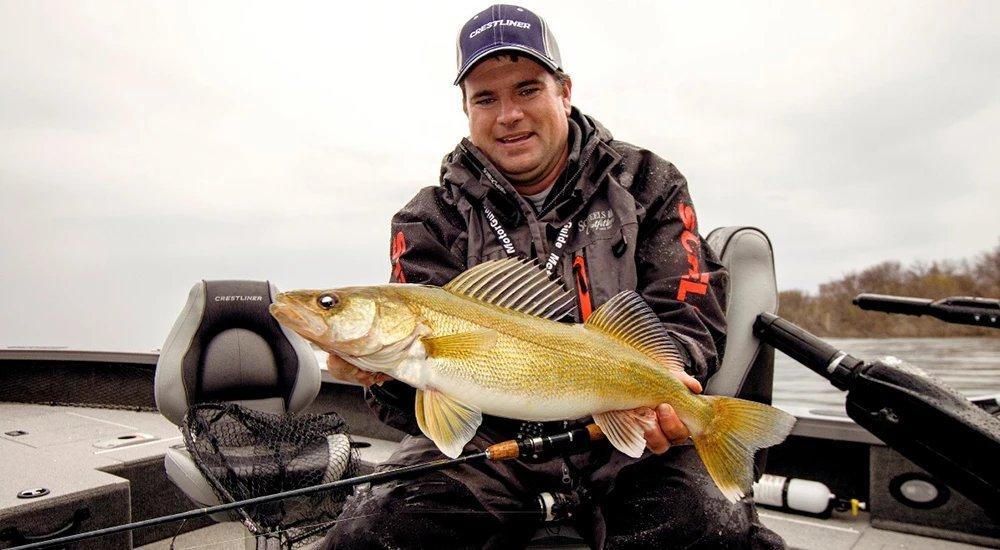
During mid- to late-summer, many walleye anglers turn to trolling as their primary strategy. From flats and basins to contours, trolling lets anglers cover a wide area in less time to catch big fish scattered throughout the lake. When the weather gets especially hot, one pattern brings great success: trolling weed bowls. SCHEELS Pro Angler Jason Mitchell shares this late-season walleye strategy with us and gives a few tips on choosing a trolling lure and setting up your rig.
Trolling Weed Bowls & What to Look For
Jason has found trolling weedy flats and bowls especially productive during the dog days of summer: “We have seen little precipitation, high heat, and low wind across many regions where we’ve been fishing. These flat hot temperatures combined with lower water levels have changed many patterns. We still find walleye on classic deep rock locations, but when conditions get hot, weeds offer good oxygen and shade that will hold fish even when surface temps are cooking.”
During late summer the weeds have had time to grow and are often tall. In many locations where Jason fishes, the weeds even reach the surface. He’s noticed a pattern: the weed lines are distinct, usually reaching the surface until 10 feet of water. Many of the flats where he’s found these weeds have troughs or bowls that are slightly deeper, like a twelve- to fourteen-foot hole surrounded by weedy areas that are about ten feet or less.
Impact of Water Clarity
Water clarity can also affect how the weeds have grown and have an impact on your trolling program. Murkier water typically causes shallower weed growth with distinct edges, while clearer water often has deeper weed growth with less defined weed lines. Jason suggests changing your strategy based on the water you’re fishing: “When trolling around weeds, the advantage generally lies in having the shortest amount of line possible to reach trolling depth so you can clean weeds off faster. However, clear water might dictate getting the lure further away from the boat using planer boards. We seldom catch fish close to the boat on clear water, especially on lakes with zebra mussels.”
Choosing the Best Trolling Lures
In these weedy areas, Jason offers this advice: “If the spots are small, you can slip bobber or jig the locations, but for bigger spots, we find trolling crankbaits to be incredibly effective. It almost seems like the fish get concentrated into these locations late in the summer.” Looking for a great walleye trolling lure? Try a high-action lure to create enticing movement while moving through weedy areas. “High-action lures like the Salmo Hornet are deadly around weeds as the intense vibration shakes off weeds and pulls fish out of the weed beds.”
Developing a Trolling Strategy
Once you have a walleye trolling lure that will perform in weeds, Jason recommends you do some research on the lake you’ll be fishing to find the most productive spots and plan your strategy.
“The program [your fishing strategy] depends on the weed profile. For example, on Devils Lake in North Dakota, the bowl might be three acres and only ten feet deep but surrounded by an eight-foot contour and everything less than eight feet is weed choked. The program is often as simple as running cranks down to eight feet of water and tracing the inside perimeter of the bowl. On Leech Lake in Minnesota, the weed edge might not be so defined in that weeds come up in eight to nine feet of water but there is a twelve- to fourteen-foot trough where the weeds are about three feet from the surface. Here we might be running cranks five to six feet down so the lures run just over the tops of the deeper weeds.”
Jason’s found these weedy bowls extremely productive, especially since many anglers don’t notice these depressions or bowls when targeting walleye. “Many anglers tend to look for structure, something protruding or sticking up from the bottom. A long hole or bowl that is just two to five feet deeper than the rest of the flat is much more subtle and anglers often overlook these locations.”
While you might have to adjust your cranks and the amount of line as summer progresses and weeds grow even taller, fish really concentrate into these locations during mid- to late-summer. With a contour map and a little research, these weed bowls and troughs are a great addition to your late-season walleye strategy. You may get tangled in the weeds as you get familiar with a new spot, but the location will only get easier to fish as you learn the area and fine-tune your program.
Jason offers this final piece of advice: “When in doubt as to where to run the bait, run them high and make the fish come up for the lures. When walleye fishing gets tough, these weed trolling patterns often save the day for us.”
Want more tips to improve your success on the water? Check out our guide to Midwest bass fishing >
About our Experts
Jason Mitchell is an industry-leader in both ice and open-water fishing. He enjoys fishing for a variety of different species in the Midwest. He has been a partner with SCHEELS for over 10 years.