



Parts of a Baseball Bat: A Complete Guide
Whether you’re a parent buying your first bat for your little leaguer or a player looking to upgrade, understanding the anatomy of a baseball bat is key to making the right choice. Each component plays an important role in performance, comfort, and control. Our Baseball Experts break down the parts of a bat, explaining how each functions so you know which questions to ask when choosing a new one.
1. End Cap
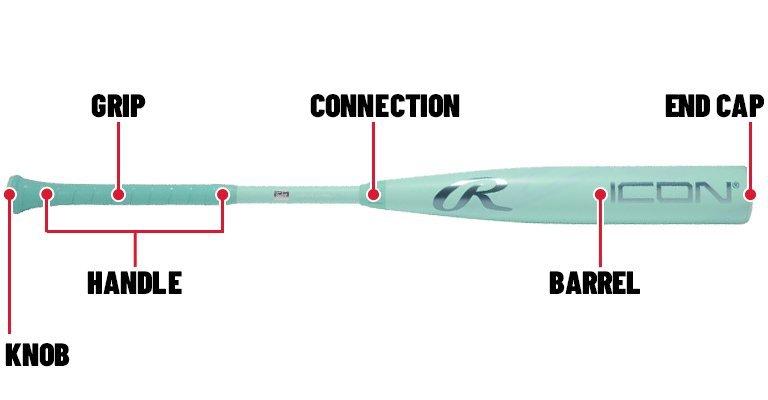
The end cap is located at the very tip of the bat and is found on nearly every bat, regardless of the bat's construction. Its main job is to maintain the rigidness of the barrel on impact, helping your bat perform consistently.
2. Barrel
The barrel is the part of the bat that makes contact with the ball—and it’s designed to maximize the sweet spot—the ideal point for hitting the ball for power and control. Barrels are usually made from composite materials or aluminum, depending on the bat’s design. The diameter and material of the barrel affect the bat’s weight, balance, and “pop,” which is why this part is crucial for performance.
End Loaded vs. Balanced Bats
Not all bats are built the same—how weight is distributed along the barrel can affect swing speed, power, and feel.
-
Balanced Bats: Weight is evenly distributed from handle to barrel, making the bat feel lighter and easier to control. Balanced bats are great for younger players or anyone looking for a smooth, controlled swing.
-
End-Loaded Bats: More weight is concentrated toward the end of the barrel, increasing the momentum and power when you make contact with the ball. These bats often feel heavier but can help stronger or more experienced hitters hit the ball farther.
3. Connection (2-Piece Bats)
Some bats have a connection piece between the barrel and handle. The connection reduces vibration from mishits or hits off the end of the barrel, making swings more comfortable and reducing sting in the hands.
Expert Tip | One-piece bats do not have a connection piece, so they deliver more direct feedback from the ball but less vibration reduction.
Related Expert Content | Bat Construction & Materials >
4. Handle
The handle is where you grip the bat. Handles can be made of aluminum or composite materials. Higher-end bats often feature a lighter composite handle for better performance and swing control.
5. Grip
The grip wraps around the handle and helps you maintain control, especially on sweaty days or during rainy conditions. Grips come in various thicknesses and materials, so you can choose one that feels best in your hands. A good grip improves comfort and reduces the risk of slipping during a swing.
6. Knob
At the bottom of the bat is the knob. Its main purpose is to prevent the bat from slipping out of your hands during a swing. Beyond safety, the knob also gives players a better feel and control over their swings.
Understanding the parts of a baseball bat is the first step to helping you make the right choice when choosing a new bat. From the end cap to the knob, every part of the bat has a purpose. For additional questions about choosing a baseball bat, stop into your local SCHEELS to speak with a Baseball Expert!