



Types of Exercise Bikes: Key Differences Explained
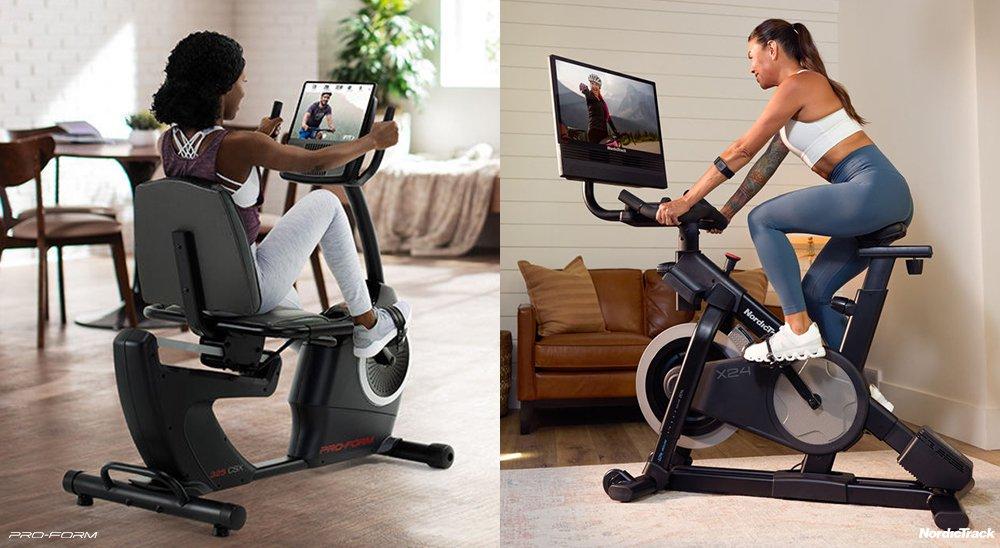
When setting up a home gym, choosing the right exercise bike often comes down to a few popular models. Each design offers distinct benefits that cater to different fitness needs, comfort levels, and workout styles. Our Experts put together this guide to help you make an informed decision.
What is a Recumbent Bike?
A recumbent bike is a type of stationary exercise bike that features a reclined seating position. The seat is larger and more comfortable, with a backrest that supports your lower back. The pedals are positioned in front of your body, allowing you to pedal in a more relaxed, seated position. This design is particularly beneficial for those seeking a low-impact workout that minimizes strain on the joints.
What is an Upright Bike?
An upright bike resembles a traditional bicycle. It has a smaller seat and requires you to sit in an upright position, similar to riding a commuter bike. The pedals are located directly beneath your body, which can engage more muscle groups and provide a slightly more intense workout. Upright bikes are often favored by those looking for moderate-intensity cardio with a more traditional upright posture.
Other Upright-Position Bikes: Indoor Cycling & Air Bikes
It’s important to note that an upright bike should not be confused with the following two stationary bike types that offer an upright posture:
Indoor Cycling Bikes
An indoor cycling (or studio) bike is a popular type of stationary bike designed to closely mimic the feel and intensity of riding an outdoor racing bicycle or participating in a studio class. They are built for high-intensity training, like HIIT or power-based workouts, and typically use a heavy flywheel and a resistance system (usually friction or magnetic) that allows the user to perform sprints and ride out of the saddle (standing up) with high power. Compared to an upright bike, they typically require the rider to sit in a more forward-leaning position.
Air Bikes
An air bike (or fan bike/assault bike) is a distinct type of stationary bike that uses a large fan to generate resistance. This fan creates unlimited resistance that is entirely proportional to the user's effort—the harder and faster you go, the more resistance you face. Air bikes also feature moving handlebars that are synchronized with the pedals, demanding a full-body workout (engaging arms, chest, core, and legs simultaneously). They are built for extreme intensity and efficiency, making them the preferred choice for HIIT and functional fitness conditioning.
Which Exercise Bike is Right for Me?
The best stationary bike choice depends entirely on your personal fitness goals and needs.
Fitness Goals and Workout Style
-
Choose the Recumbent Bike if: Your main goal is comfort, rehabilitation, or a consistent, non-strenuous cardio workout. It's the ideal exercise equipment for seniors or those with pre-existing conditions.
-
Choose an Upright Bike if: You want a simple, moderate-intensity cardio workout while maintaining a standard upright, seated posture.
-
Choose the Indoor Cycling Bike if: You are training for outdoor cycling or want to replicate the intensity of an indoor cycling class. An indoor cycling bike is ideal for higher-intensity cardio workouts and for those who prefer a forward-leaning posture.
-
Choose the Air Bike if: You want an extreme full-body conditioning workout that engages your arms, chest, core, and legs simultaneously.
Space, Budget, and Practical Needs
-
Space Constraint: If your workout area is especially small, the recumbent bike may not be your best option.
-
Budget: Traditional upright bikes are typically the most affordable, while indoor cycling and air bikes are often the most expensive.
-
Personal Comfort: If you know you won't use a machine because the seat is uncomfortable, prioritize the recumbent bike's comfortable seat to ensure workout consistency.
Exercise Bike Comparison Chart
The following chart offers a quick overview of the key differences between types of exercise bikes:
| Feature | Recumbent Bike | Upright Bike | Indoor Cycling Bike | Air Bike |
|---|---|---|---|---|
| User Posture & Comfort | Reclined seating with a large backrest. Offers superior comfort and lower back support. | Upright posture, similar to a commuter bike. Comfortable for seated, steady rides | Aggressive, forward-leaning posture (like a racing bike). Less focus on comfort. | Upright posture. Focus is on dynamic, high-intensity movement, not prolonged comfort. |
| Workout Impact & Intensity | Low-impact. Generally better for steady-state cardio. | Slightly higher impact. Good for moderate, seated cardio | High-intensity. Designed for standing sprints and power-based workouts. | Extreme intensity. Full-body HIIT. |
| Muscle Engagement | Primarily targets the lower body. | Targets the lower body and core. | Engages lower body, core, and upper body. | Full-body workout. |
| Space & Price | Requires more space. Typically comes at a mid-price point. | Compact design takes up less space. Generally the most affordable option. | Compact design. Price varies, but high-end models are often expensive. | Compact design. Price varies, but tends to be a high-end option for intense training. |
| Drawback | Less core and upper body involvement; larger footprint. | Not designed for standing/sprinting; less intense than cycling or air bikes. | Can be uncomfortable for beginners; not ideal for individuals with back issues. | Can be extremely taxing on the body; often louder due to the fan mechanism. |
Choosing the right exercise bike ultimately depends on your fitness goals, comfort preferences, and available space. Each type of bike offers unique benefits and can be a valuable addition to your home gym. By understanding the differences and considering your personal needs, you can select the exercise bike that best supports your fitness journey. For further guidance, visit your local SCHEELS to speak with a Fitness Expert and explore our range of exercise bikes.